Choosing a cabinet maker is an important step in any kitchen, bathroom, laundry room, garage, or built-in storage project. Cabinets influence how the room works every day, and the process involves decisions about layout, materials, finishes, storage, installation, and coordination with other parts of the remodel. A thoughtful selection process helps you find a partner who listens to your goals and provides a clear path from design through completion. Scottsdale Elite Cabinets provides custom cabinetry for kitchens, bathrooms, garages, closets, home offices, and more throughout Scottsdale and nearby communities.
Instead of choosing based on a single photo or total price, use the initial conversation and proposal to understand how each cabinet maker approaches your particular project.
Begin with your project goals
Before reaching out, write down what you want to improve. Do you need more drawer storage, a better pantry, an updated cabinet finish, or a complete kitchen reconfiguration? Are you keeping your appliances or replacing them? Is the goal to refresh sound existing boxes through refacing or painting, or do you need new cabinets because the layout and construction no longer work?
Bring inspiration images, but also bring practical details. Note your household size, cooking habits, accessibility needs, countertop appliances, and items that are difficult to store. These facts give a cabinet maker the information needed to recommend useful solutions rather than only a certain style.
Ask about design and measurement
A cabinet plan should be based on accurate information about the room. Ask how measurements are collected and how appliance specifications, plumbing, windows, doors, ceiling conditions, and existing floors are considered. A clear drawing or elevation helps you review cabinet locations, door swings, drawer clearances, tall cabinets, panels, and trim before ordering begins.
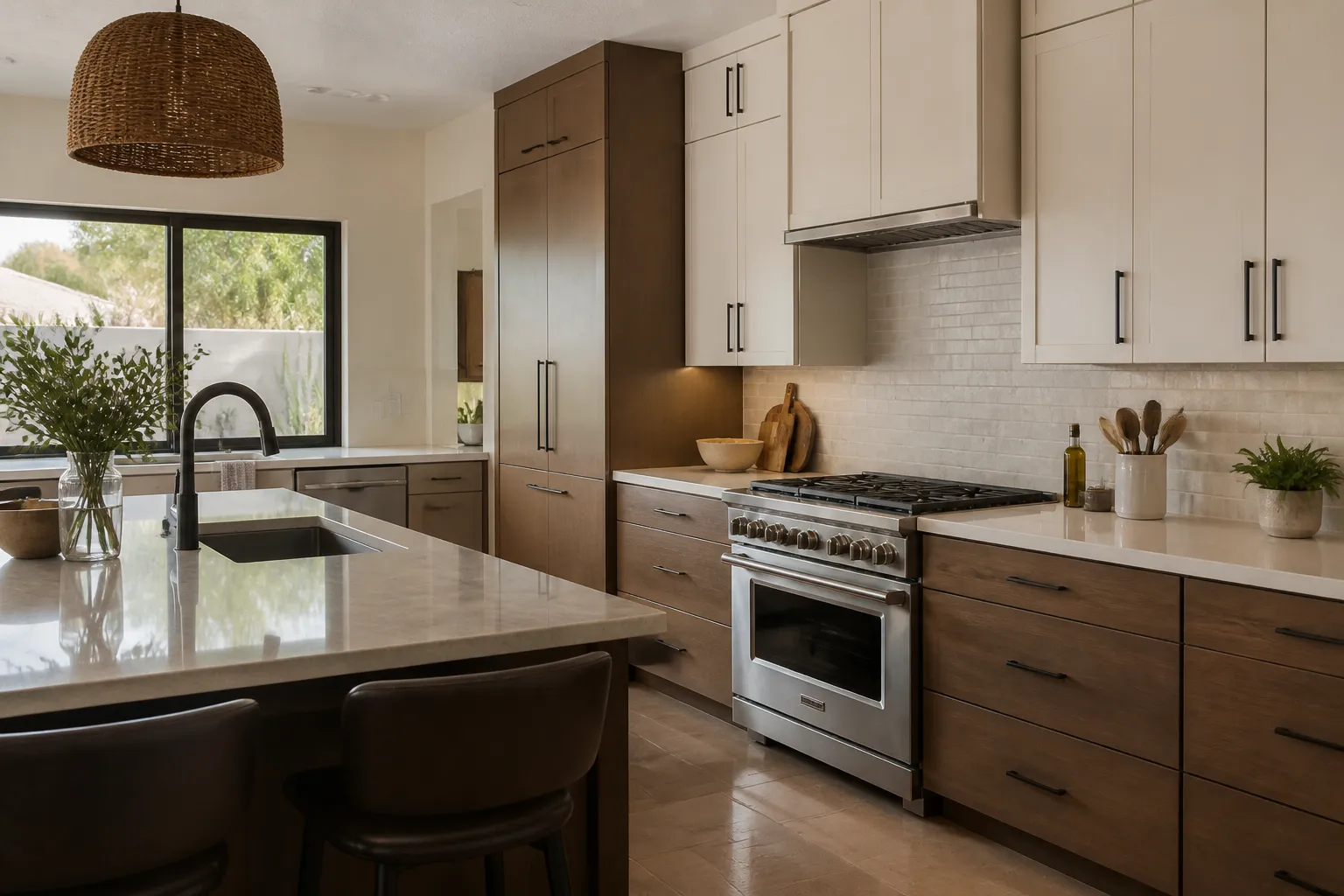
Look for a discussion that includes workflow. The sink, cooktop, refrigerator, prep areas, pantry, trash, and everyday storage should fit the way you use the kitchen. In other rooms, the questions change. A garage needs to consider heavy loads and vehicle clearance, while a laundry room may need space for hampers, supplies, and folding.
Discuss cabinet options in plain language
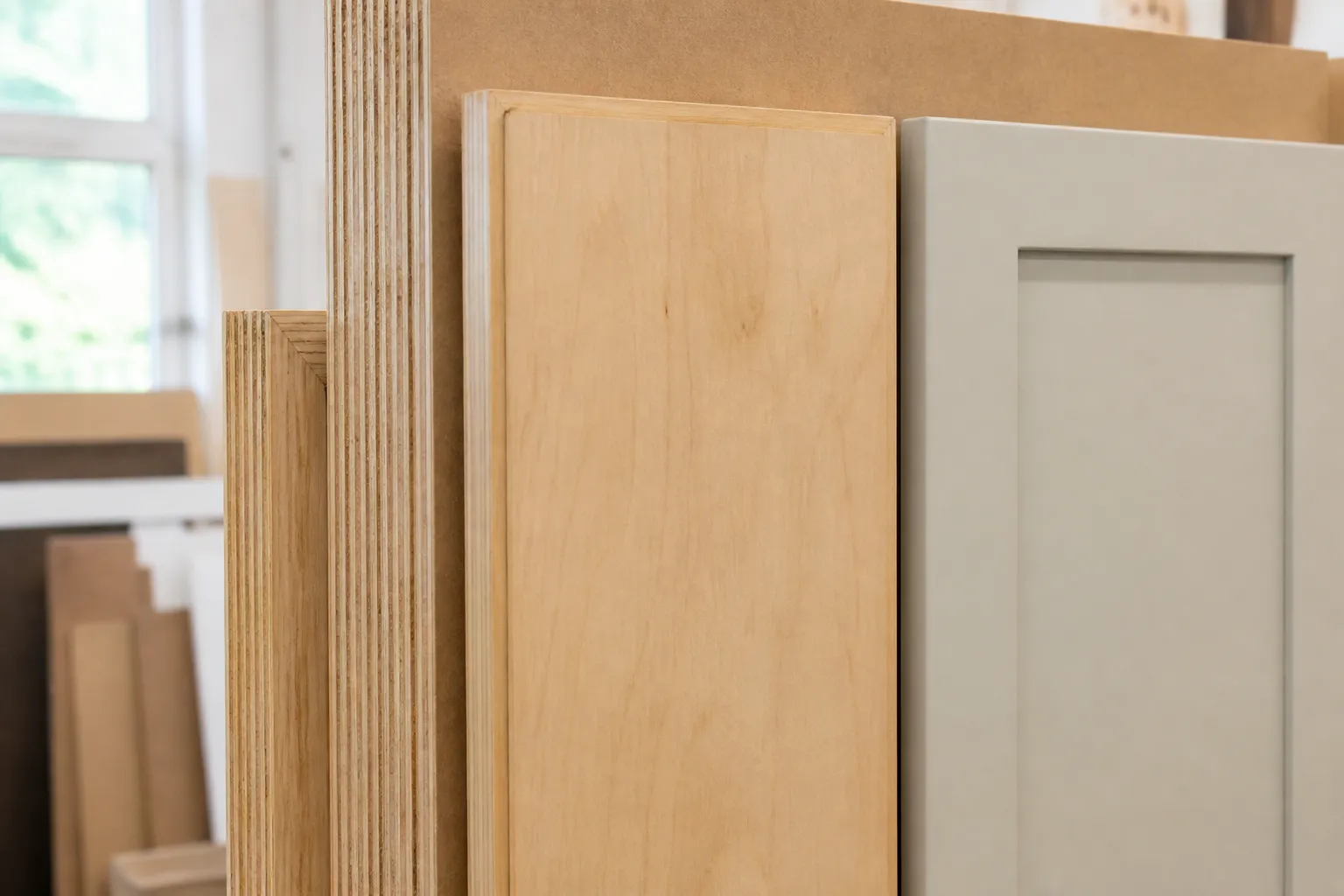
You should be able to understand what is being proposed. Ask whether the solution is stock, semi-custom, custom, refacing, repair, or painting, and why it suits the room. Request details about cabinet-box construction, doors, drawers, hinges, finishes, shelving, hardware, and storage accessories.
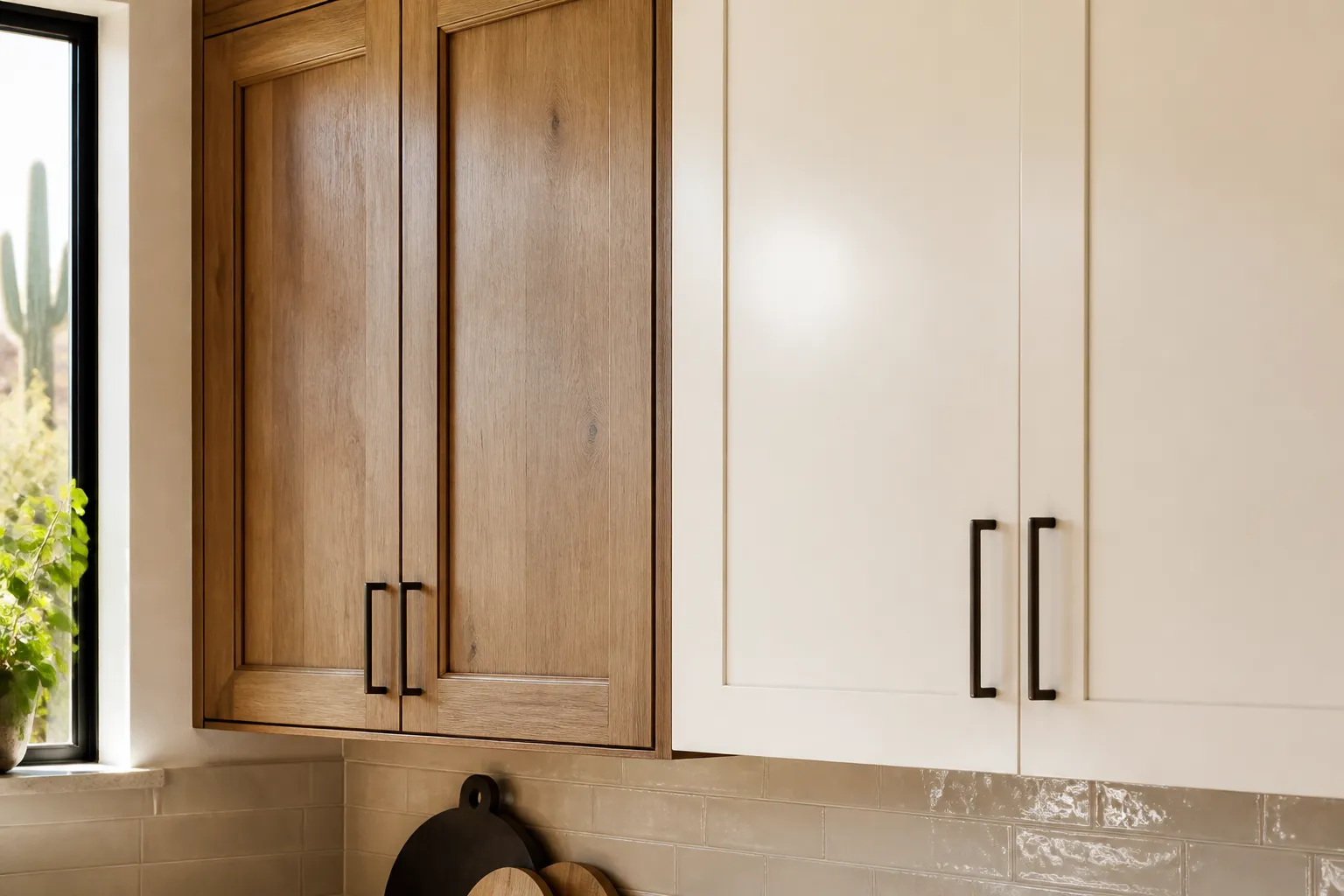
Materials and finishes should be matched to the environment. A painted interior kitchen door, a stained wood feature, and a garage cabinet exposed to high heat may call for different considerations. Samples are useful, especially in Scottsdale’s intense light. View them near the surfaces that will remain in the room.
Compare scopes, not only totals
Two proposals can have very different totals because they include different work. Ask for a written scope that identifies the cabinets, door style, finish, hardware, accessories, delivery, installation, demolition if included, and exclusions. Find out whether trim, end panels, toe kicks, appliance panels, and final adjustments are part of the plan.
Also ask how changes are handled after selections are approved. A detailed scope gives you a better basis for comparison and reduces surprises. The lowest proposal may omit installation labor, useful accessories, protective panels, or coordination work that is included elsewhere.
Understand the project sequence
Cabinetry is often one stage in a larger remodel. Ask how the cabinet maker coordinates with countertop fabricators, electricians, plumbers, flooring installers, painters, and appliance installers. Confirm what needs to happen before cabinet installation and which steps must wait until cabinets or countertops are in place.
Reliable scheduling depends on timely selections and accurate information. Provide appliance specifications early, review drawings carefully, and avoid major changes once materials are ordered. A good cabinet maker will explain the sequence and identify decisions that could affect timing.
Review communication and service expectations
Pay attention to how questions are answered during the consultation. Are the recommendations tied to your stated goals? Is the scope explained clearly? Do you know who your point of contact will be and how updates will be shared? Clear communication is valuable when multiple decisions and trades are involved.
You can also ask to see examples of comparable work and to discuss the types of projects the company handles. Focus on workmanship details that relate to your project: door alignment, panel fit, finish consistency, storage planning, and the overall relationship between cabinetry and the room.
Make a confident decision
The right cabinet maker should help you understand tradeoffs rather than pressure you toward a predetermined solution. You should leave the process with a realistic scope, a plan for decisions, and confidence that the design responds to how you live.
Scottsdale Elite Cabinets works with homeowners on custom and semi-custom cabinetry, refacing, painting, repair, and storage solutions. Contact us to discuss your project, explore materials and layouts, and take the next step toward a well-planned space.