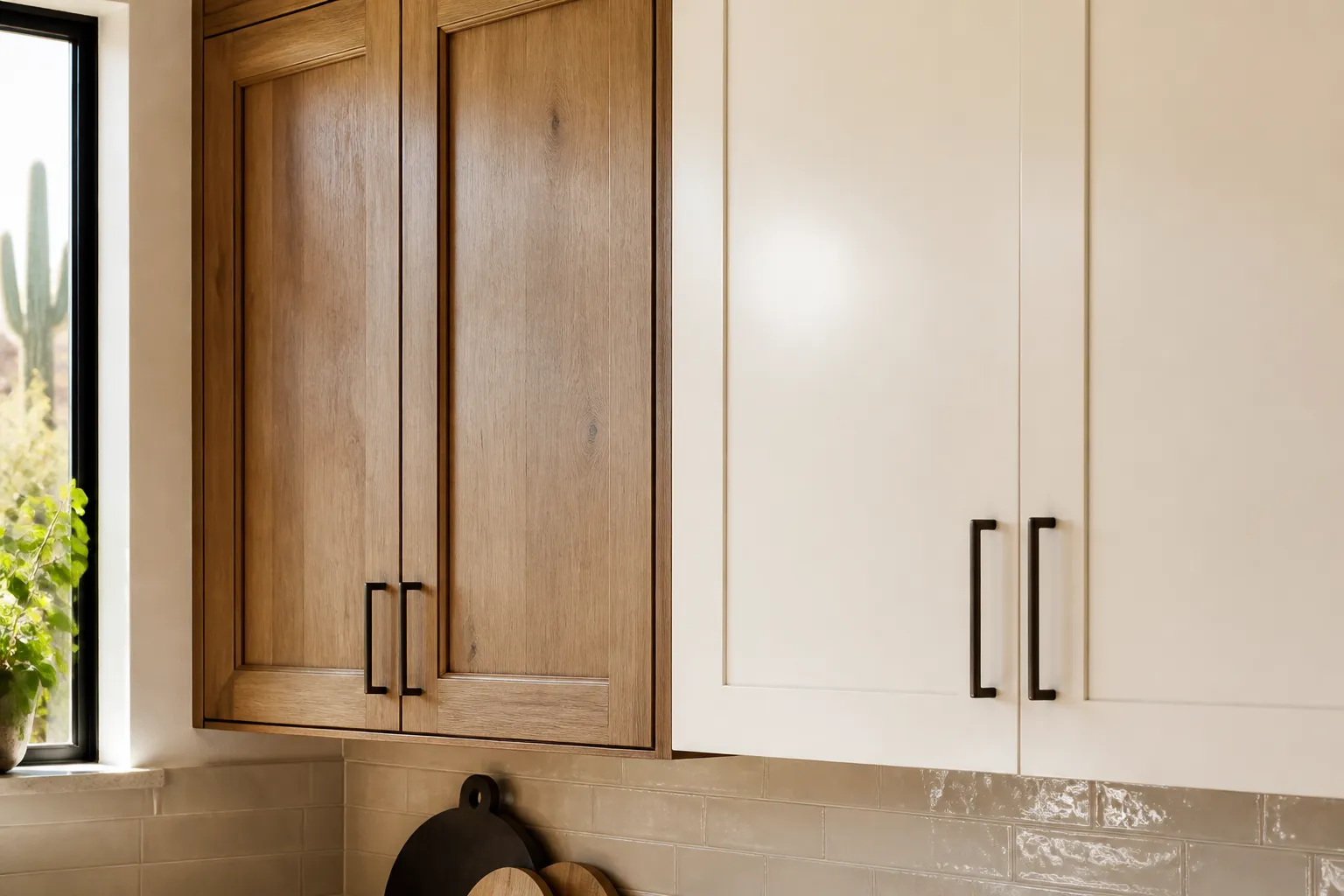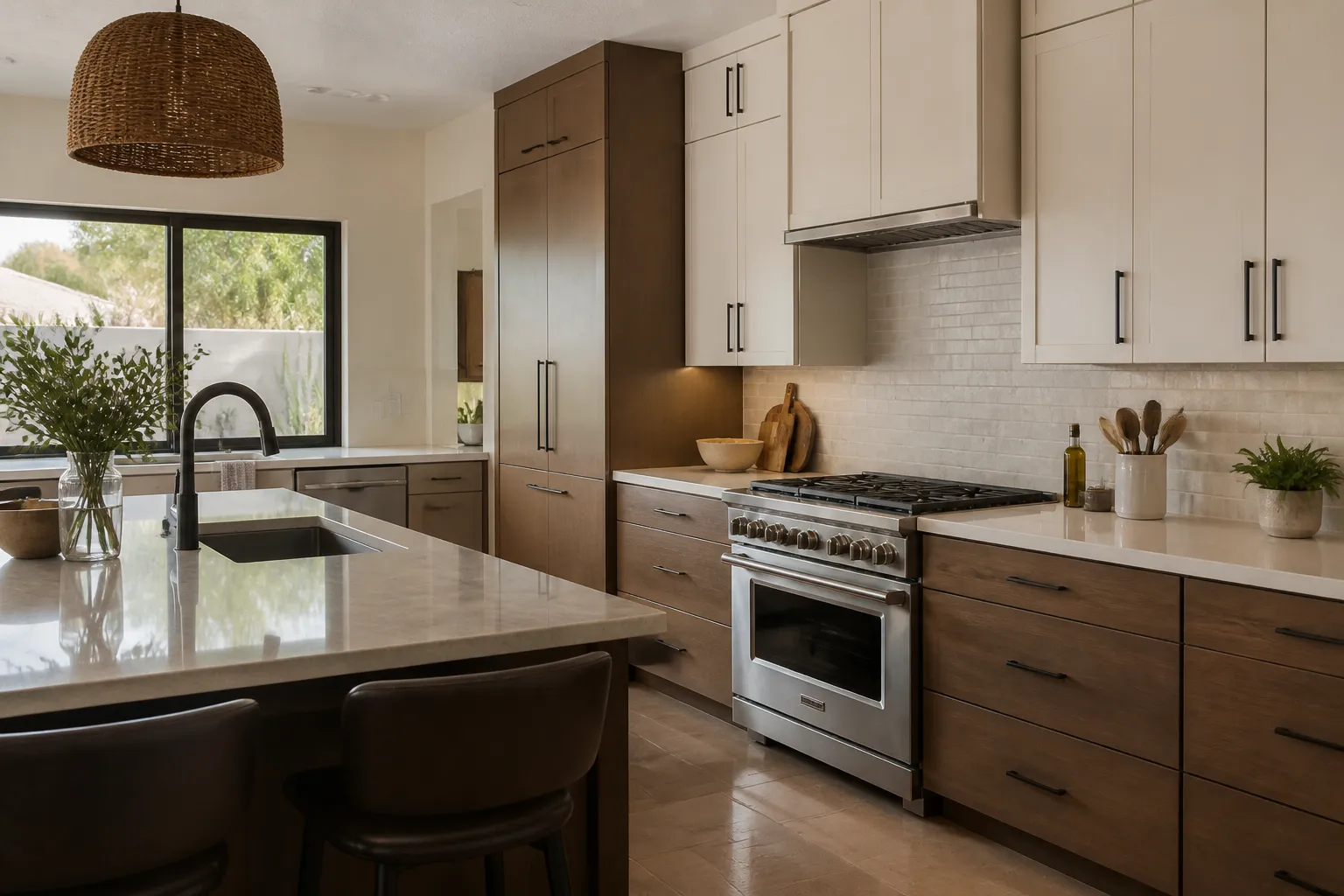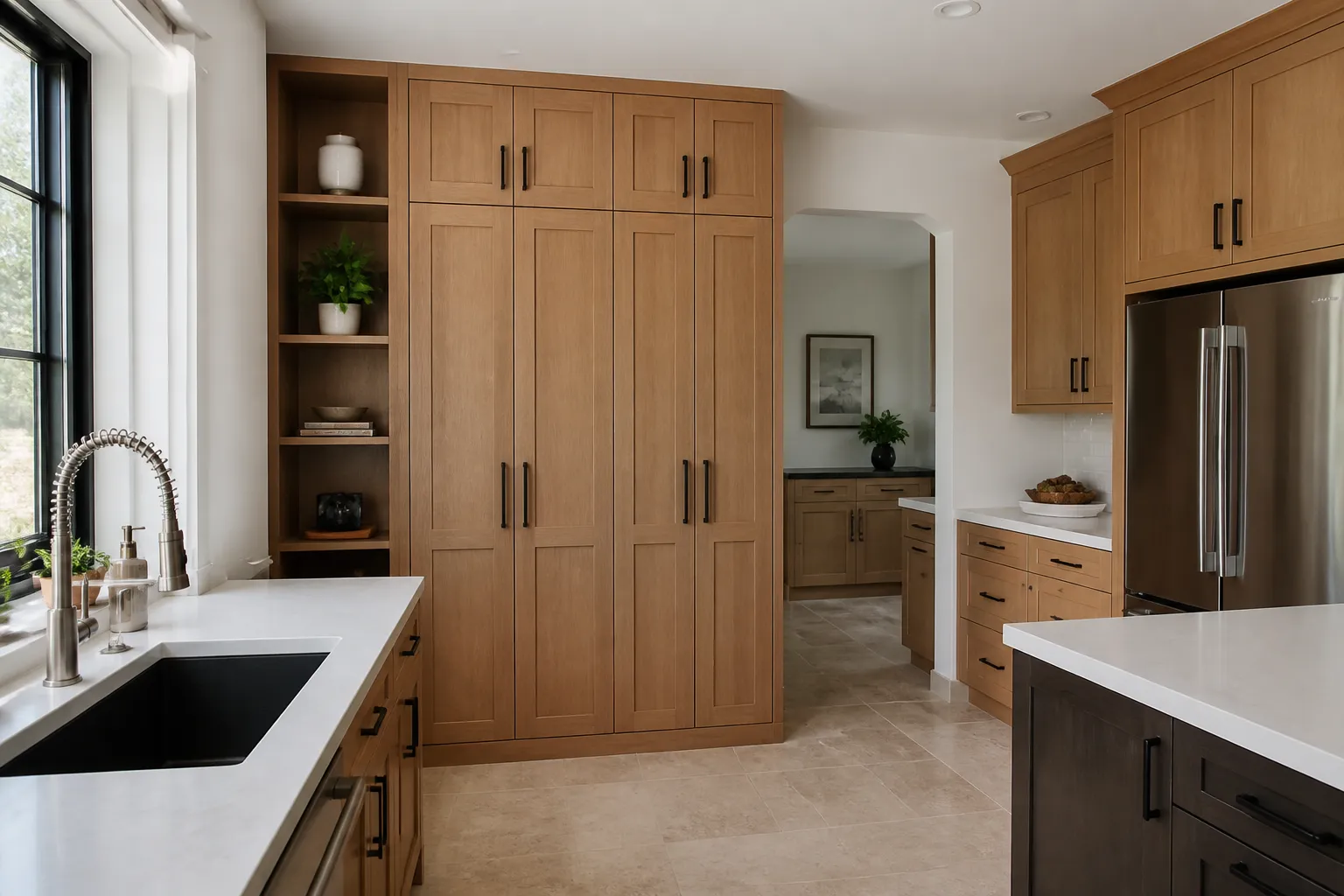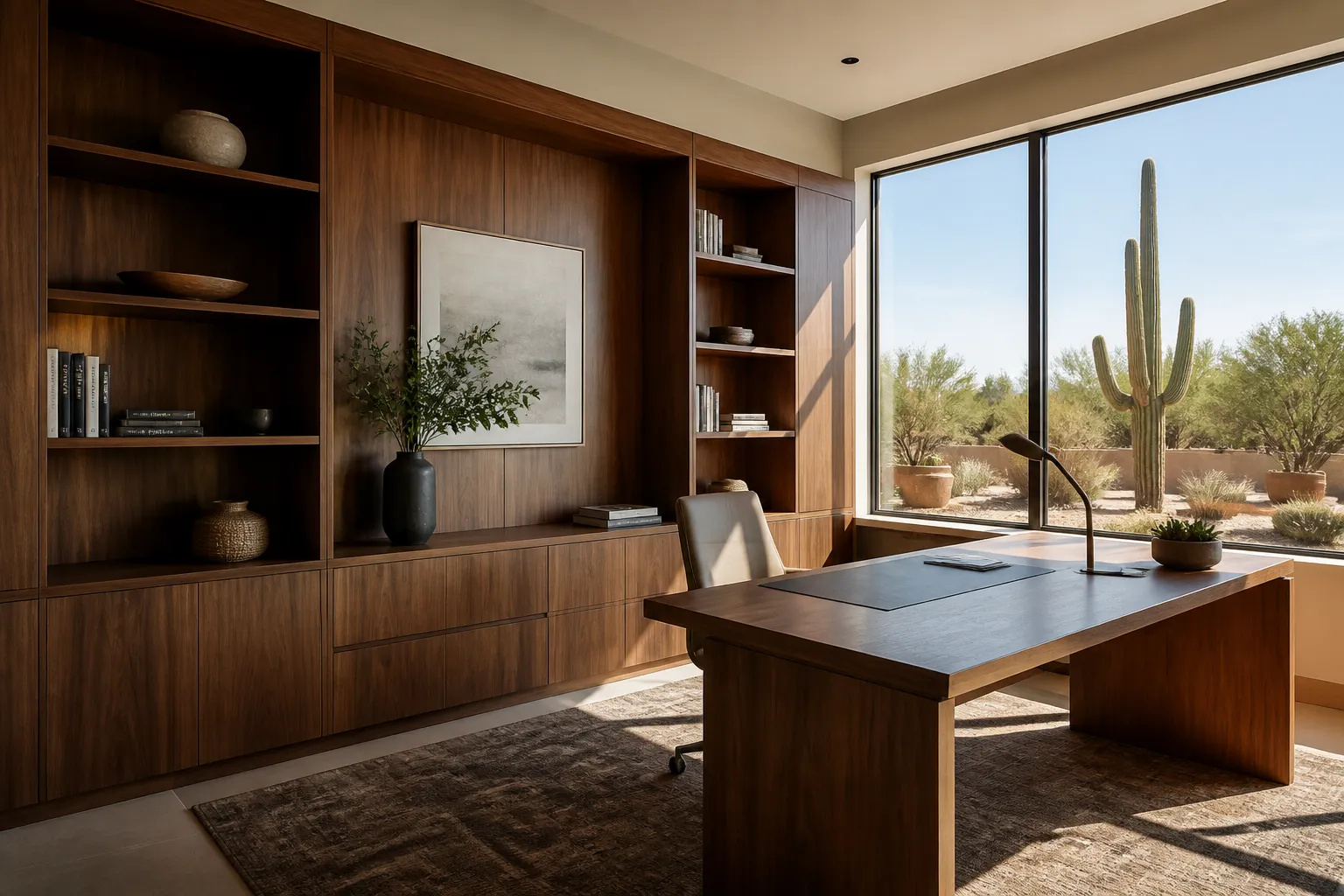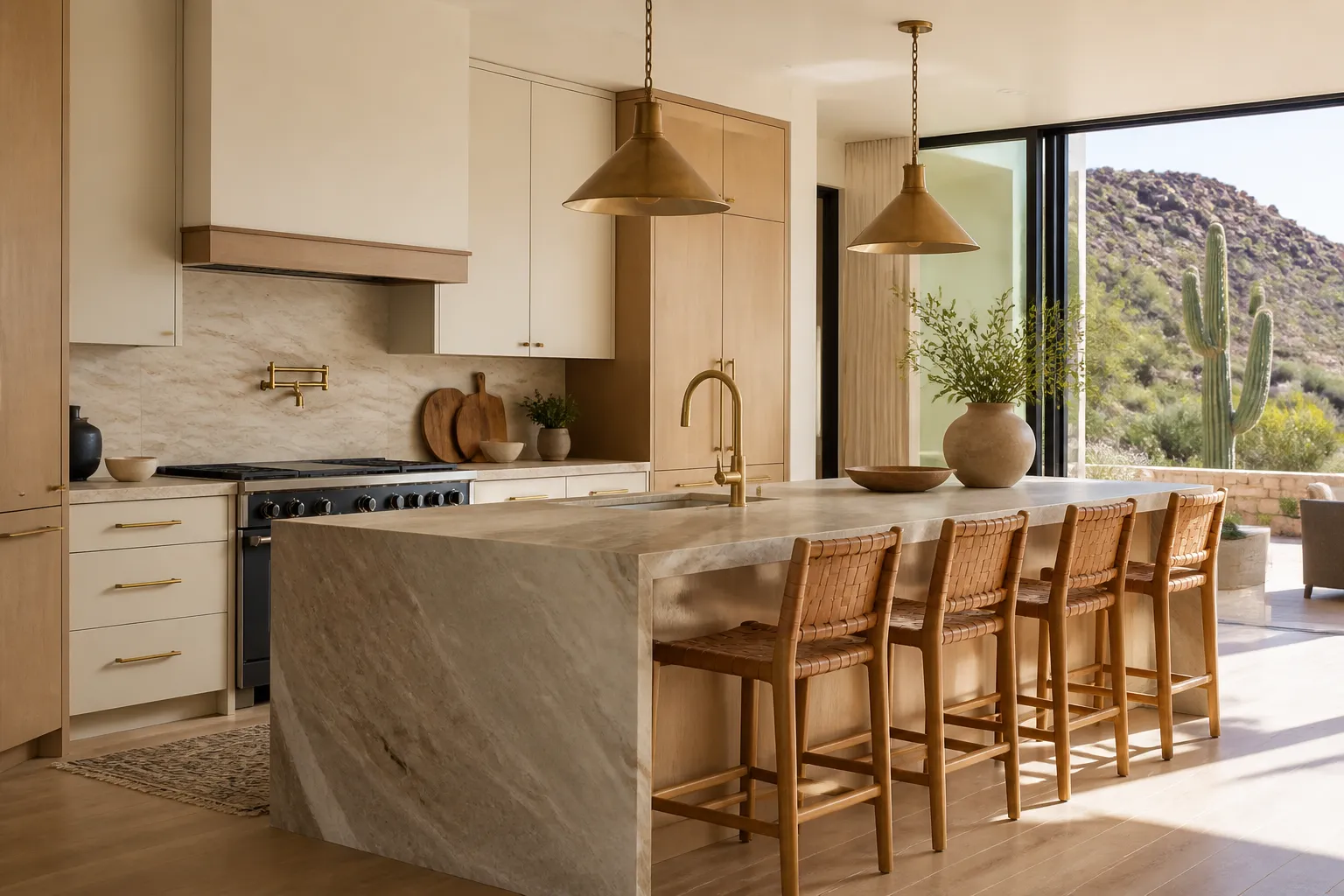
Scottsdale Elite Cabinets helps homeowners understand cabinet materials so they can ask better questions during a remodel. MDF and plywood are both widely used in cabinetry, but they are made differently and can be used for different cabinet components.
Neither material is automatically “better” in every situation. A useful comparison looks at where the material is used, how it will be finished, the environment around it, and the performance you expect from that part of the cabinet.
What is MDF?
MDF, short for medium-density fiberboard, is an engineered wood product made from fine wood fibers combined with resin and formed into smooth, dense panels. Its consistent surface is one reason it is often considered for painted cabinet doors, panels, and trim.
Because MDF does not have a natural wood grain, it can provide a very even base for paint. It can also be shaped for detailed profiles. Material thickness, construction quality, and the intended use still matter when evaluating any MDF component.
What is plywood?
Plywood is made from thin layers of wood veneer bonded together with the grain direction alternating between layers. The layered construction gives it a recognizable edge and can provide strength for many cabinet box applications.
Plywood panels vary in grade, thickness, veneer quality, and construction. It is important not to treat every plywood product as identical. Ask what grade and thickness are being used and where it will be used in the cabinet build.
Cabinet boxes, doors, and panels
The best material may change from one component to another. Cabinet boxes, shelves, drawer parts, doors, decorative panels, and painted trim have different performance demands. A material that works well for a smooth painted door face may not be the preferred choice for every structural cabinet part.
Focus the conversation on the complete cabinet construction, including joinery, back panels, shelf support, and how the boxes will be installed. The material name alone does not fully explain cabinet quality.
Painted finishes and surface appearance
MDF is often chosen when a smooth painted finish is a priority because the surface is uniform. Plywood can also be used in cabinet construction and may be more appealing where a wood veneer or visible grain is desired.
Samples are useful here. View the actual door and panel finish rather than relying only on a small color chip. Light, sheen, door profile, and edge treatment all affect what you see in the finished kitchen or bath.
Moisture and location considerations
Kitchens, bathrooms, laundry rooms, and other living spaces have different moisture conditions. Proper installation, ventilation, edge treatment, and prompt attention to leaks are important for any cabinet material. Discuss the location and expected use with your cabinet professional so materials are selected appropriately.
It is also wise to distinguish normal household humidity from direct, repeated water exposure. No cabinet material should be expected to perform well when a leak or standing water goes unresolved.
How to make a material comparison
- Ask which material is used for boxes, doors, shelves, and panels.
- Compare the specific cabinet line, not just a general material label.
- Review finish samples in your home’s lighting.
- Consider the room, its use, and the desired cabinet appearance.
The strongest choice is the one that fits the cabinet component and the room’s needs. Contact us to discuss cabinet construction materials and options for your Scottsdale project.